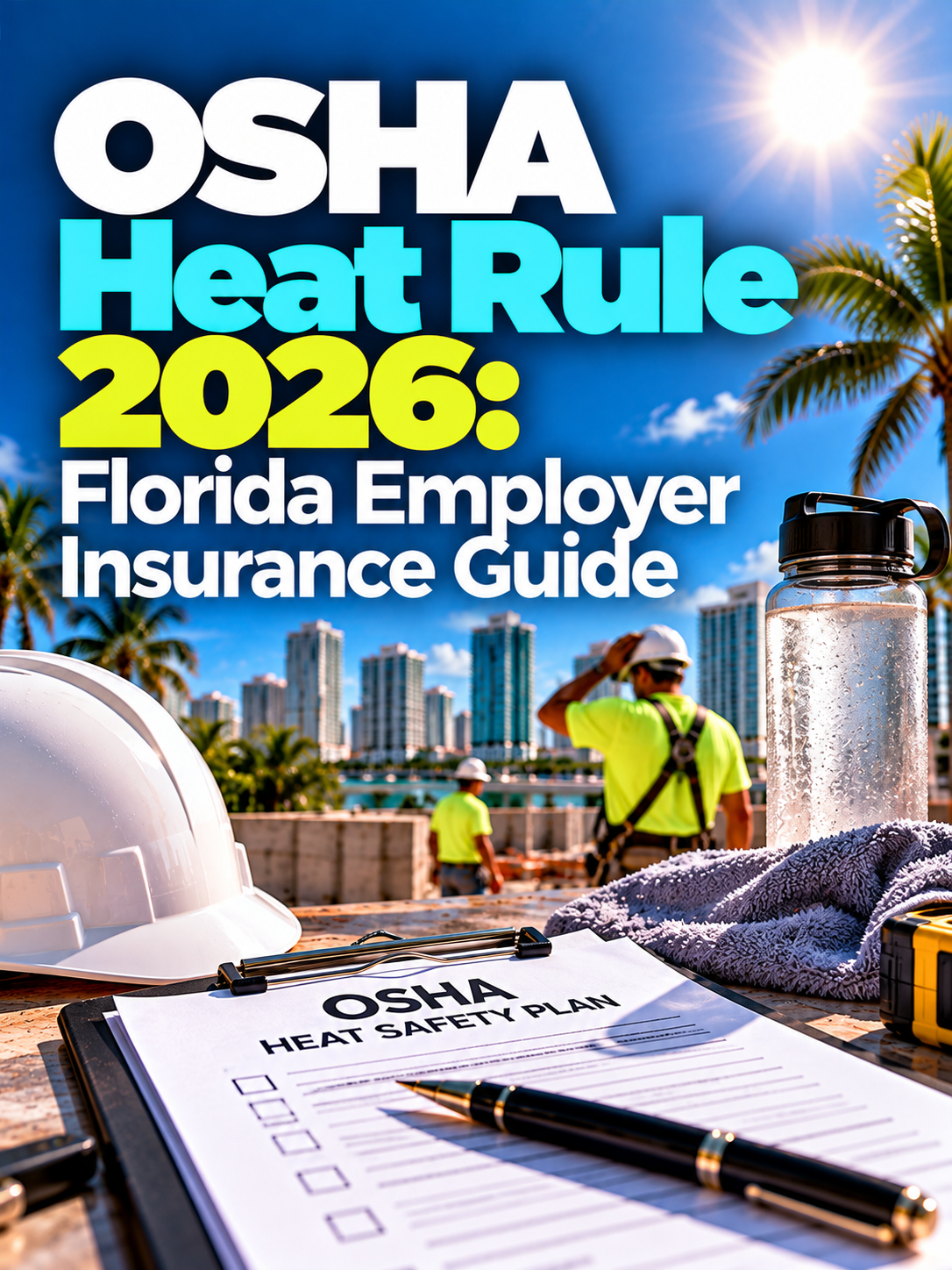
Quick answer: As of fall 2026, there is no enforceable federal OSHA heat standard, and Florida has no statewide heat rule. In fact, Florida’s HB 433, effective July 1, 2024, prohibits cities and counties from requiring employers to provide shade, water breaks, or other heat protections. But that does not mean Florida employers are off the hook. OSHA issued an updated Heat National Emphasis Program on April 10, 2026, and inspectors can cite employers under the General Duty Clause. For outdoor-heavy Florida industries, a written heat plan is now smart risk management and a workers’ comp cost control.
Where the OSHA Heat Rule Stands in 2026
According to a summary of the rulemaking timeline, the key dates are:
- August 30, 2024: OSHA published its proposed Heat Injury and Illness Prevention rule.
- 2025: The comment period closed and public hearings were held.
- December 2026: A supplemental notice of proposed rulemaking is expected.
- October 2027: The Department of Labor’s stated target for a final standard, though realistic implementation could take far longer.
The proposal would require a written, site-specific heat plan, with triggers at 80°F and 90°F heat index, plus acclimatization schedules and emergency response procedures. It would cover outdoor work and indoor spaces without climate control. You can follow the federal program on OSHA’s heat exposure page.
Florida’s Unusual Position
Seven states, including California, Colorado, Maryland, Minnesota, Nevada, Oregon, and Washington, enforce their own workplace heat rules. Florida is not one of them. Instead, HB 433 preempts local governments from setting heat requirements, as Marshall Dennehey’s analysis notes. The practical result is that Florida employers face no statewide heat checklist, yet they still face OSHA enforcement, workers’ comp claims, and potential liability when someone is hurt.
What This Means for Your Insurance
Heat illness is a real source of workers’ compensation claims in construction, roofing, landscaping, agriculture, hospitality, and logistics. A few practical points for Florida employers:
- Claims drive cost. Even with rates trending down (see our post on Florida workers’ comp rates for 2027), your own claims history shapes your experience modification factor.
- Documentation protects you. A written plan, training records, and incident logs help in an OSHA inspection and in contested claims.
- Carriers care about loss control. Underwriters often ask about safety programs at renewal, and strong programs can support better terms.
- Federal enforcement is active. The 2026 Heat NEP targets 55 high-hazard industries through 2031, so waiting for a final rule is a risky strategy.
A Practical Florida Heat Safety Checklist
- Write a simple heat illness prevention plan for each worksite.
- Provide water, shade or cooling rest areas, and scheduled breaks on hot days.
- Acclimatize new and returning workers gradually over their first days.
- Train supervisors to recognize heat exhaustion and heat stroke and to call 911 immediately.
- Track heat index forecasts and adjust schedules for the hottest hours.
- Document training, incidents, and corrective actions.
Frequently Asked Questions
Does Florida have a heat safety law for workers?
No. Florida has no statewide heat standard, and HB 433 prevents cities and counties from adopting their own requirements. Federal OSHA can still cite employers under the General Duty Clause.
Is there a final OSHA heat rule?
Not yet. The rule was proposed in August 2024, and the Department of Labor’s stated target for a final standard is October 2027.
Is heat illness covered by workers’ compensation in Florida?
Work-related heat illness can result in a workers’ compensation claim, though compensability depends on the facts. An attorney or your carrier can advise on specific situations.
What is OSHA’s Heat National Emphasis Program?
It is an enforcement initiative, updated April 10, 2026, directing inspections in 55 high-hazard industries during heat advisory days.
Talk to a Florida Risk Advisor
Highlight Risk Services helps Florida businesses connect safety programs to better coverage conversations. Learn what we do, explore our 2026 commercial insurance trends, or contact us to review your workers’ comp program before renewal.
This article is general information, not legal, safety, or insurance advice. Regulatory timelines can change.